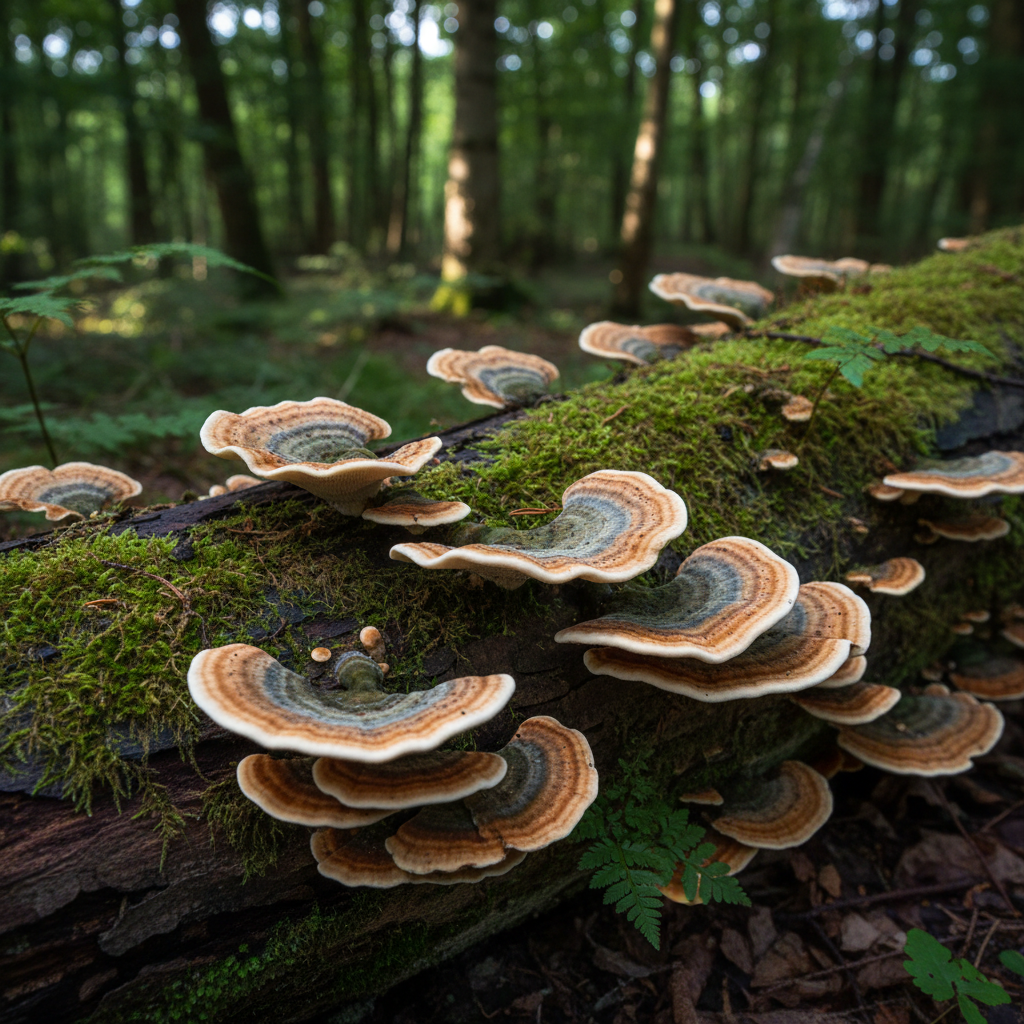
TURKEY TAIL
Trametes versicolor
The world's most researched medicinal mushroom. Immune powerhouse with 400+ studies. Wild-harvested from Irish forests.
Discover Benefits Identification GuideTrametes versicolor
The world's most researched medicinal mushroom. Immune powerhouse with 400+ studies. Wild-harvested from Irish forests.
Discover Benefits Identification GuideOne of the most common and powerful medicinal mushrooms in the world.
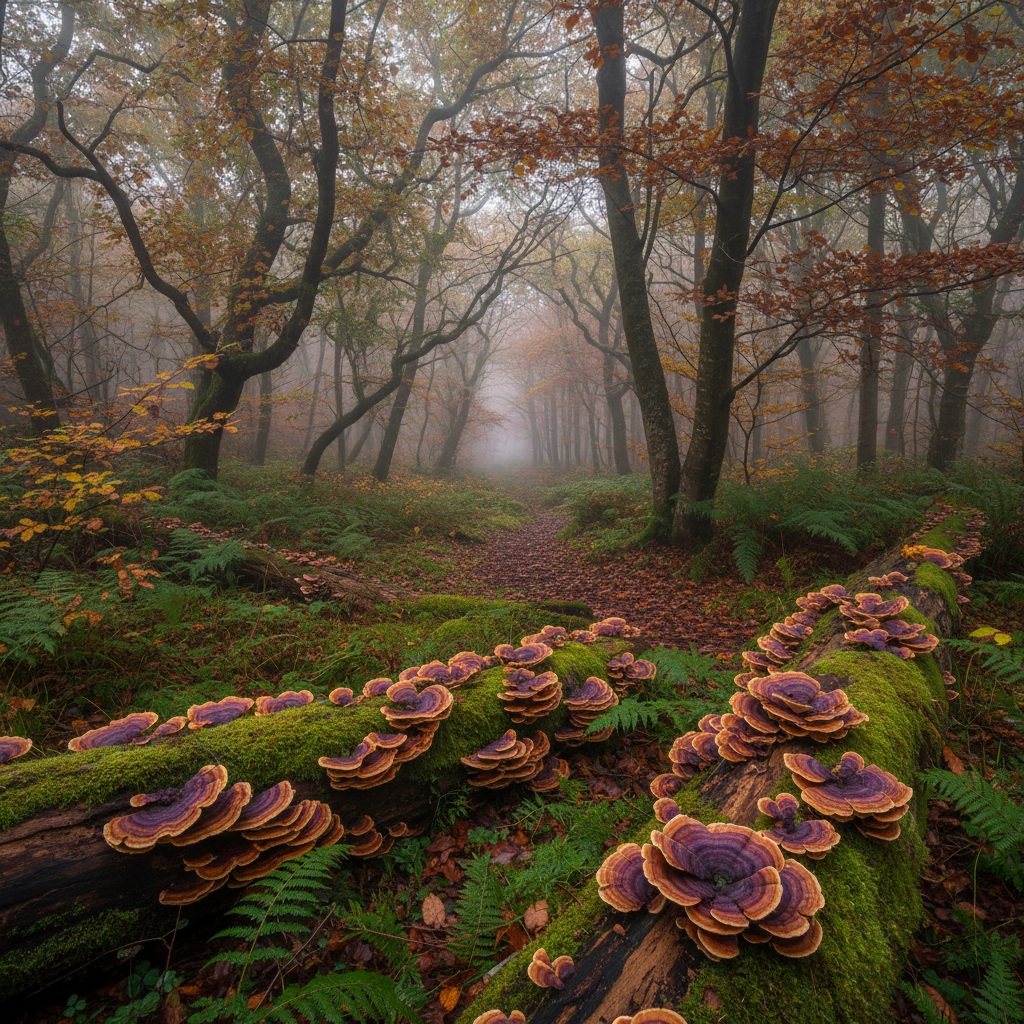
Turkey Tail (Trametes versicolor) is a bracket fungus found worldwide on dead and fallen hardwood. Named for its stunning concentric colour bands that resemble a wild turkey's fanned tail feathers.
Used for centuries in Traditional Chinese Medicine as Yun Zhi and in Japanese medicine as Kawaratake, Turkey Tail is now the most clinically studied medicinal mushroom on Earth, with over 400 published peer-reviewed studies.
In Ireland, Turkey Tail thrives on oak, beech, and birch in ancient woodlands, particularly in the mild, wet climate of the West — making Roscommon an ideal foraging ground.
Backed by science, trusted by tradition. Here's what Turkey Tail can do.
PSK and PSP polysaccharides activate NK cells, T-cells, and macrophages. Enhances both innate and adaptive immunity without overstimulation.
PSK (Krestin) is an approved adjuvant cancer therapy in Japan since 1977. Studies show improved 5-year survival rates in gastric, colorectal, and lung cancers when combined with chemotherapy.
Acts as a prebiotic, feeding beneficial bacteria like Bifidobacterium and Lactobacillus. A healthy gut = a strong immune system. Studies show improved microbiome diversity within 8 weeks.
Rich in phenols and flavonoids that combat oxidative stress. Protects cells from free radical damage and supports healthy aging at the cellular level.
Reduces chronic inflammation markers including TNF-alpha and IL-6. Beneficial for autoimmune conditions and chronic inflammatory states.
Supports post-exercise immune function, reduces upper respiratory infections in athletes, and speeds recovery through enhanced immune surveillance.
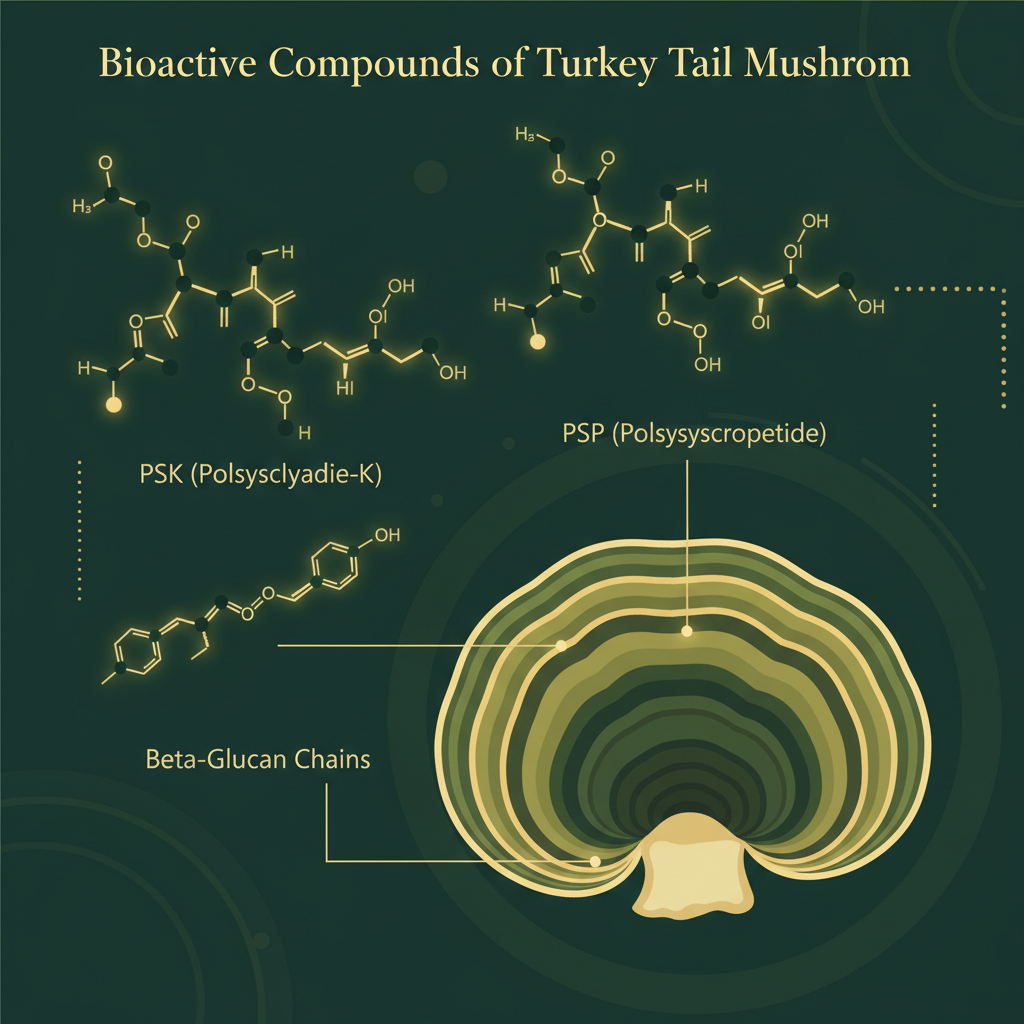
Turkey Tail contains a remarkable array of bioactive compounds that work synergistically.
Protein-bound polysaccharide. Approved cancer drug in Japan since 1977. Activates dendritic cells, enhances cytotoxic T-cell response. Over $357M annual sales in Japan.
Water-soluble polysaccharide-peptide complex. Stimulates white blood cell production, modulates immune response. Extensively studied in China for oncology support.
Complex polysaccharides that bind to immune cell receptors (Dectin-1, CR3). Trigger cascading immune activation. The primary mechanism behind immunomodulation.
Anti-inflammatory and antiviral compounds. Ergosterol (provitamin D2), ergone, and fungisterol. Require alcohol extraction for bioavailability.
Key clinical studies that demonstrate Turkey Tail's remarkable potential.
A Phase I clinical trial funded by NIH showed that Turkey Tail improved immune status in breast cancer patients post-radiation. Natural killer cell activity significantly increased.
Torkelson et al., ISRN Oncology, 2012
Meta-analysis of 8,009 patients showed PSK significantly improved 5-year survival rates in gastric cancer when used alongside chemotherapy. Hazard ratio: 0.88.
Oba et al., Cancer Immunology, 2007
Turkey Tail extract significantly increased Bifidobacterium and Lactobacillus populations while reducing pathogenic Clostridium and E. coli in human subjects within 8 weeks.
Pallav et al., Gut Microbes, 2014
88% of patients taking Turkey Tail showed positive HPV results clearance over 12 months, compared to 5% with standard treatment alone. Remarkable immunological response.
Donatini, International Journal, 2014
PSK showed direct anti-proliferative effects on pancreatic cancer cell lines in vitro. PSP demonstrated selective cytotoxicity against tumour cells while sparing healthy tissue.
Zhang et al., various 2012-2019
Decades of clinical use in Japan (PSK since 1977) with minimal side effects. No hepatotoxicity, no drug interactions reported. Safe for long-term daily use. One of the safest medicinal mushrooms.
Multiple meta-analyses, 1977-2024
How to confidently identify Turkey Tail in the wild. Follow this checklist.
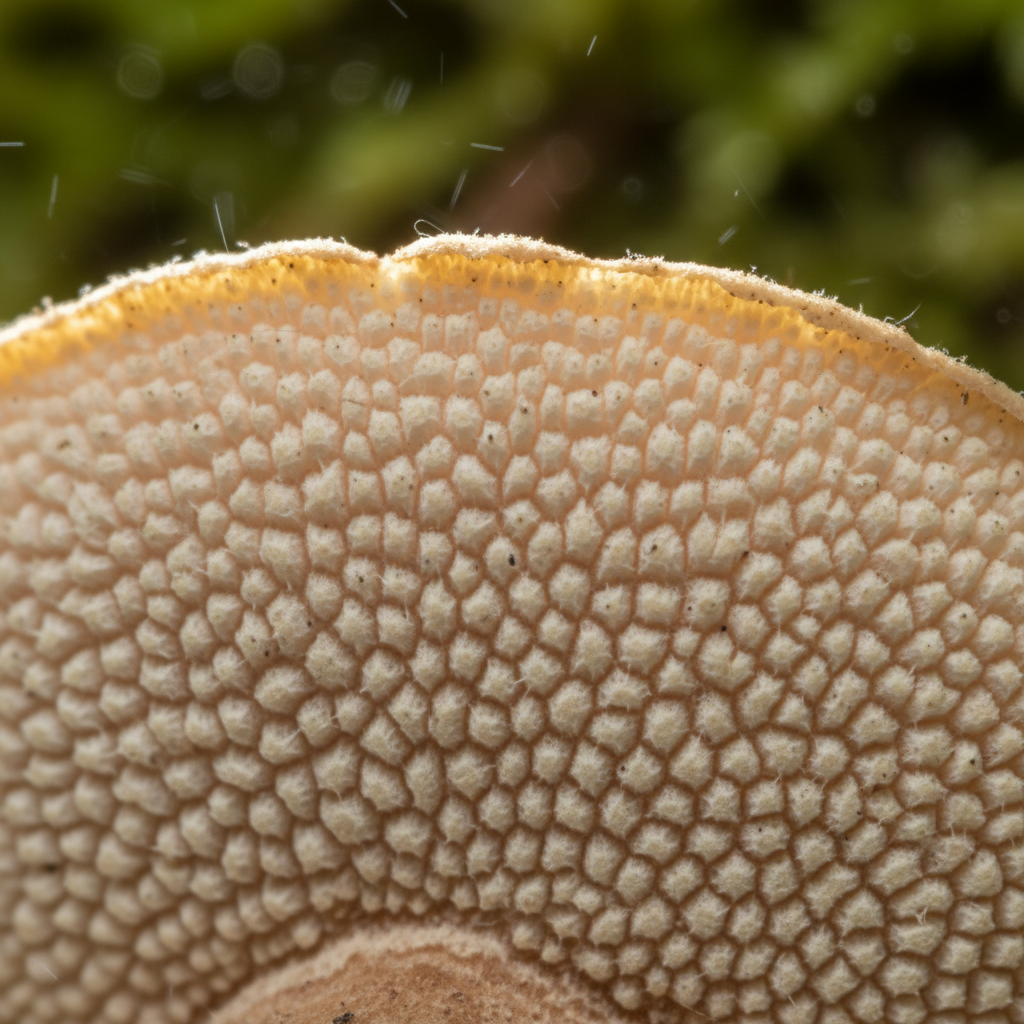
Multiple distinct colour bands in concentric zones — brown, tan, cream, grey, blue, sometimes green. Each cap shows a unique pattern like a fingerprint. If it's a single uniform colour, it's not Turkey Tail.
Caps are 1-3mm thick, thin and flexible like leather when fresh. They should bend without snapping. If thick or woody, consider Ganoderma or other polypores.
Critical check: Flip the mushroom. True Turkey Tail has tiny white pores on the underside (2-3 pores per mm). If you see gills or a smooth surface, it's a lookalike (Stereum or false turkey tail).
Grows as flat, shelf-like brackets (no stem) in overlapping rosettes on dead hardwood. Individual caps 3-8 cm wide. Multiple caps fused at the base in tiered formations.
Run your finger across the top. It should feel finely velvety or fuzzy, with alternating smooth and hairy texture bands. Smooth caps suggest Stereum (a harmless but non-medicinal lookalike).
Break a cap in half. The interior flesh should be thin, white, and tough/leathery. Dark or brown interior suggests the mushroom is old or a different species.
Always found on dead or fallen hardwood — oak, beech, birch, willow. Never on conifers. Never growing from the ground. If on a living tree, it's likely a different species.
When and where to find Turkey Tail in Irish woodlands.
New growth begins. Small fresh caps appear on logs. Good time to scout locations.
Growth slows in dry spells. Existing caps mature. Colour bands intensify.
Peak season! Rain returns, new flushes appear. Largest, freshest caps. Ideal harvesting time.
Best SeasonStill harvestable! Turkey Tail persists through winter. January-February caps are tough but potent.
Also Good
A practical guide to log cultivation in the West of Ireland.
Turkey Tail is one of the easiest medicinal mushrooms to cultivate on logs. The mild, wet climate of Roscommon and the West of Ireland provides near-perfect natural conditions — no greenhouse needed.
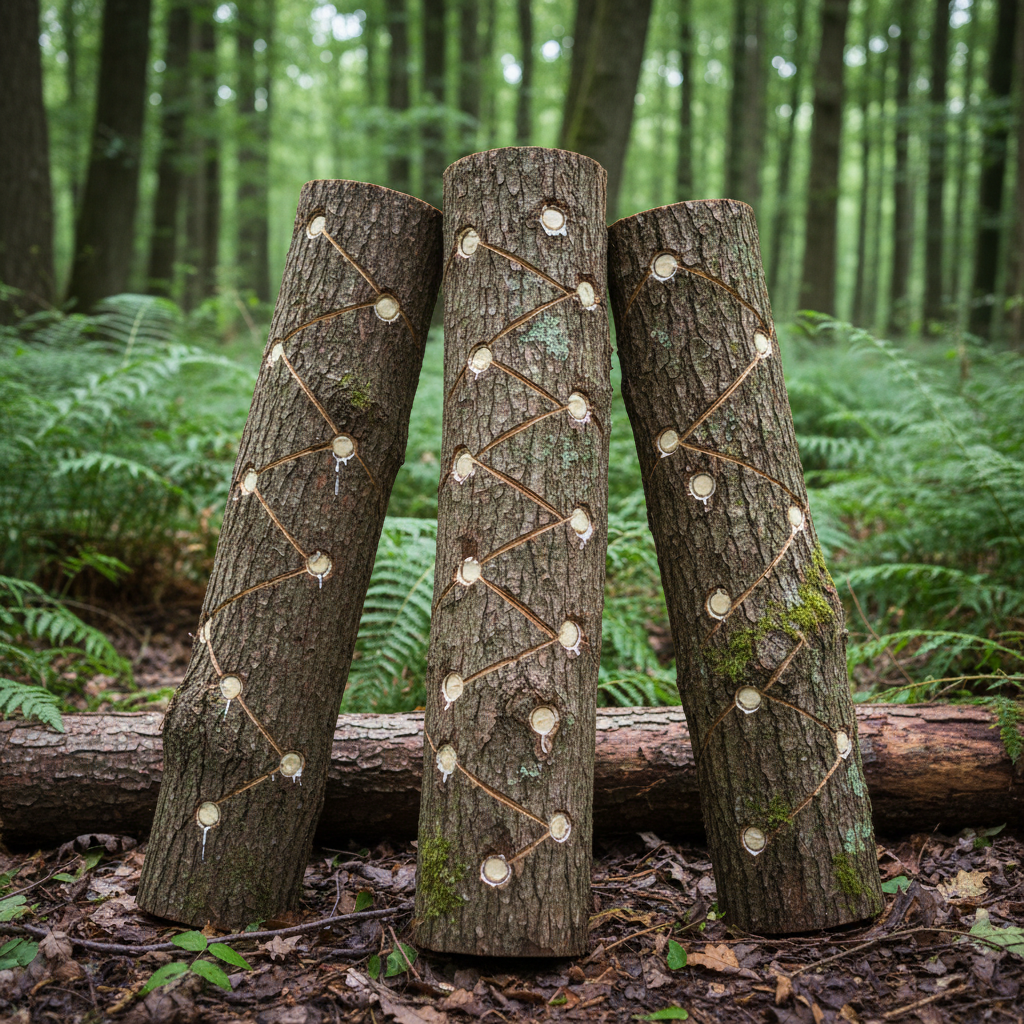
Cut fresh oak, beech, or birch logs. 10-15 cm diameter, 90-100 cm length. Use only healthy, living wood felled 2-4 weeks prior. Never use dead or diseased wood. Stack off ground while waiting.
Order plug spawn (wooden dowels) from UK/IE suppliers: GroCycle (UK), Mushroom Box (UK), or Irish suppliers. ~100 plugs per 3 logs. Approximately €15-20 for a bag of 100 plugs.
Drill 8mm holes every 15 cm in a diamond pattern across the log. Hammer in plug spawn. Seal each hole with melted cheese wax or beeswax. This protects the spawn from contamination and moisture loss.
Place logs in a shaded spot (80%+ shade) off the ground on pallets. Under trees, north side of a building, or under shade cloth. The mycelium will colonise the log over 12-18 months. Keep logs moist — 25mm rain per week or irrigate.
White mycelium will appear on log ends first. Then small bracket-shaped primordia emerge. First flush typically in autumn of the second year. Harvest when caps are flexible and colour bands are distinct.
Logs will produce 1-2 flushes per year for 3-5 years. Peak production in years 2-3. Harvest by twisting off at the base. Dry within 24 hours at 35-46°C in a dehydrator or air-dry in well-ventilated area.
Production estimates for a 3-log Turkey Tail setup over 5 years.
| Year | Fresh Weight (3 logs) | Dried Weight | Notes |
|---|---|---|---|
| 2027 | 0.3 - 1.0 kg | 40 - 140 g | First flush, establishing |
| 2028 | 0.5 - 1.5 kg | 70 - 210 g | Production increasing |
| 2029 | 0.8 - 2.0 kg | 115 - 285 g | Peak production year |
| 2030 | 0.5 - 1.5 kg | 70 - 210 g | Gradual decline |
| 2031 | 0.3 - 0.8 kg | 40 - 115 g | Final year |
| Total | 2.4 - 6.8 kg | 335 - 960 g | From 3 logs over 5 years |
Fresh:Dried ratio is approximately 7:1. Roscommon's wet climate can boost yields with 2 flushes per year. Daily dosage of 2-5g dried means 3 logs provide 4 months to 2.5 years of supply.
Know your enemies. Turkey Tail is resilient, but these threats need attention.
The #1 enemy in Irish climate. They feed directly on fruiting bodies and can destroy an entire flush overnight.
Aggressive competitor fungus. Appears as green patches on logs, can outcompete and kill Turkey Tail mycelium. Thrives in sun and heat.
The most common cause of failure. Logs need consistent moisture for mycelium to colonise and fruit. Roscommon helps, but dry spells can be fatal.
Less of an issue for Turkey Tail than soft mushrooms. Beetles may bore into bark. Flies can lay eggs on fruiting bodies.
Deer and squirrels may occasionally investigate but Turkey Tail's tough, leathery texture makes it unappealing compared to soft edible mushrooms.
Other wild fungi (Hypoxylon, Diatrype) can colonise logs before your Turkey Tail. Strong mycelium usually wins, but weak starts are vulnerable.
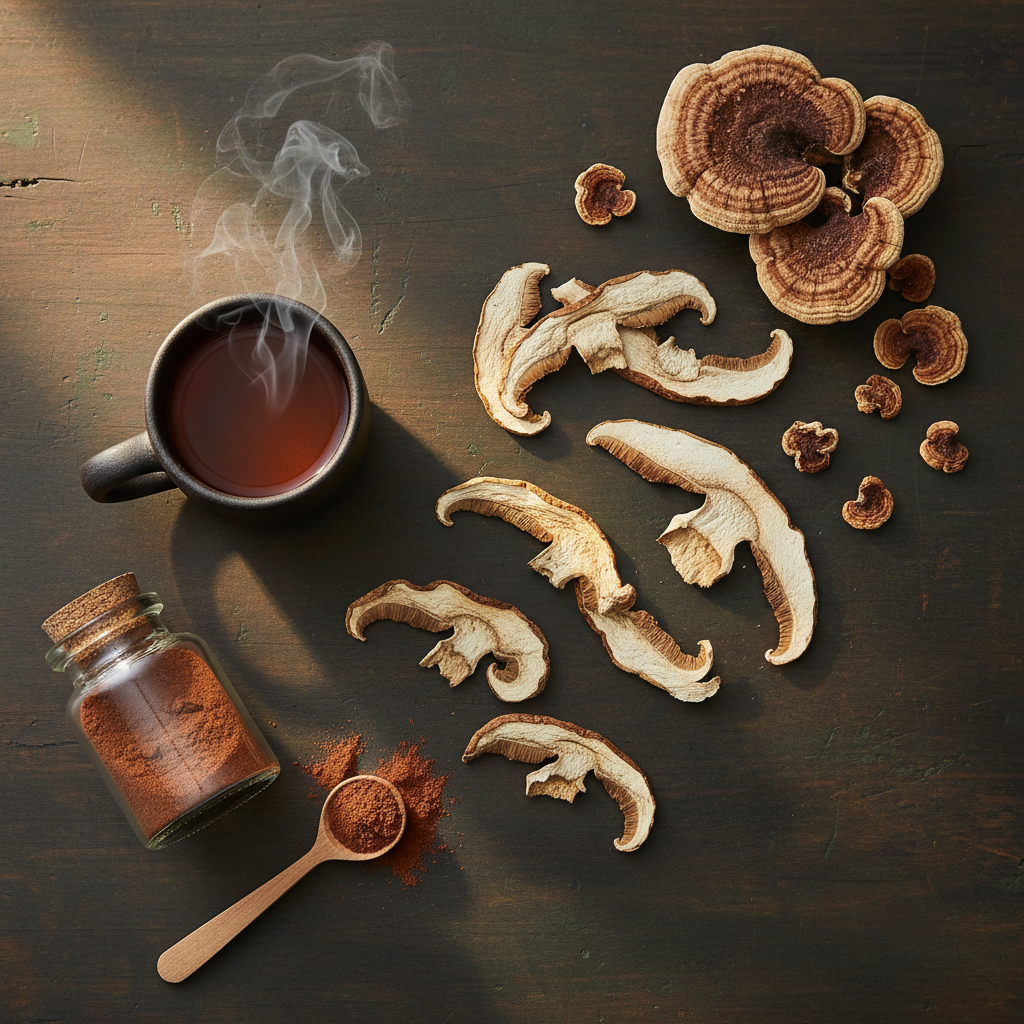
Turkey Tail is too tough to eat directly. Here's how to unlock its medicine.
Simmer 3-5g dried Turkey Tail in 500ml water for 1-2 hours on low heat. Strain and drink. Add honey or ginger to taste. The simplest and most traditional method. Rich in water-soluble beta-glucans.
Soak dried Turkey Tail in 40%+ alcohol for 4-6 weeks (alcohol extract). Then simmer the marc in water for 2-4 hours (water extract). Combine both. This captures ALL compounds — both water-soluble and alcohol-soluble.
Dry thoroughly, then grind in a coffee grinder to fine powder. Add to smoothies, coffee, soups, or fill capsules. 2-5g daily. Less bioavailable than extraction but convenient for daily use.
Add dried Turkey Tail pieces to bone broth or vegetable stock. Simmer for 2+ hours. Discard the mushroom pieces (too tough to eat). The broth absorbs the medicinal compounds beautifully.
Evidence-based dosing for different needs.
Daily immune support and gut health maintenance. Tea or powder form. Suitable for long-term daily use.
Active immune support, chronic conditions, recovery. Dual extraction tincture recommended. Most studied dosage range.
Used in Japanese clinical settings alongside conventional therapy. Always under medical supervision. PSK studies used 3g PSK (equivalent).
Turkey Tail's regulatory status in the European Union.
Turkey Tail (Trametes versicolor) has a long history of use in Europe and is NOT classified as a Novel Food. It can be legally sold as a food supplement without Novel Food authorisation.
Turkey Tail extracts and powders are legally sold as food supplements across the EU. No Novel Food application required due to established history of consumption.
Specific health claims require EFSA authorisation. General "food supplement" labelling is permitted. No therapeutic claims allowed without medical product licence.
Turkey Tail and Reishi: Legal. Chaga: Legal in supplements. Cordyceps militaris: Recently flagged as potentially unauthorised Novel Food. Lion's Mane: Under review.
EU food supplement regulations require GMP manufacturing, accurate labelling, and batch testing. Beta-glucan content testing via Megazyme method is the gold standard.